
Plus Ca Change… 40 Years of UK FMCG Marketing
In 1978 I was enjoying my last year as a carefree undergraduate studying for a Business Studies degree at the then Oxford Polytechnic (now Oxford Brookes University).
At that time, a key distinction between conventional academic degrees offered by established, “red brick” universities and those offered by the new polytechnics was their vocational orientation. Oxford Polytechnic was no exception, and, in this final year, several captains of British industry proved sufficiently generous with their time to visit us at our new Wheatley campus, and tell us about their working lives. One particular visitor’s contribution still sticks in my mind. He was a senior executive from United Biscuits’ global marketing team, and he talked in some detail about the problems the UK’s pre-eminent biscuits and snacks manufacturer was having launching McVities Digestives into China. (Distribution was proving a major obstacle as the chocolate kept melting.)
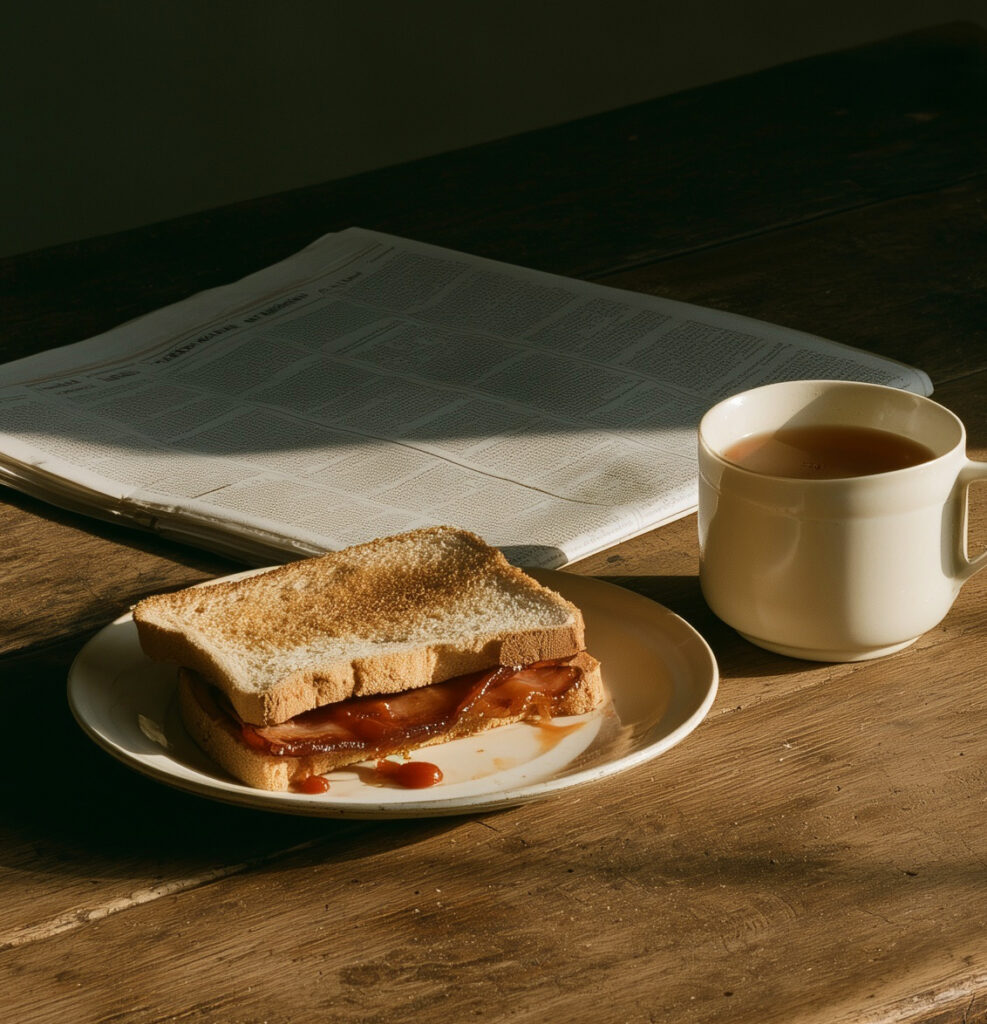
Fast forward many, many decades to this morning when, armed with a bacon sandwich and mug of Yorkshire Tea, I opened my Sunday Times Business section to be greeted with the headline, “McVities takes the biscuit to China”. My first thoughts, you won’t be surprised to hear, echoed that famous French epigram – “Plus ca change….” and all that.
But the thing is, in many respects, things appear to have changed a great deal.
Let’s start with United Biscuits (UB) itself. In the 70s and 80s, it was a powerhouse of Great British marketing talent – the “undisputed king of the British biscuit tin”, owning McVities, Crawfords and KP Snacks. Today, it no longer exists. KP Snacks was acquired by German snack giant, Intersnack in 2013, whilst its biscuit brands were largely acquired by Turkish-owned biscuits giant, Pladis in 2014.
I asked Google for a list of the 50 biggest FMCG companies in the UK in 1978. The list came back, categorised into 4 primary sectors:
- Diversified Conglomerates
- Including companies like Unilever, P&G, Rank Hovis McDougall (RHM), Cadbury Schweppes, Nestle, Reckitt & Colman, Beecham Group, Mars and Heinz
- Beverages & Brewing
- Including companies like Grand Met, Allied Breweries, Bass Charrington, Distillers, Guiness, Scottish & Newcastle and, of course, the notorious, Watneys
- Tobacco
- British American Tobacco (BAT), Imperial Tobacco, Rothmans and Gallaher Group
- Food & Dairy Specialists
- The Milk Marketing Board (Dairy Crest), Tate & Lyle, Brooke Bond Oxo, Northern Foods, Findus, Kellogg’s, HP Foods, Weetabix
For many marketers, this is a roll call from a golden age of British marketing, brand building and advertising. Today, only one company from that entire cohort remains intact, independent, and publicly traded on the London Stock Exchange: Associated British Foods (ABF). Interestingly, ABF also preserves the classic 1970s commercial model, managing a diversified portfolio (including Twinings, Kingsmill, Ryvita, Silver Spoon, and fashion giant Primark) under the majority ownership of the Weston family.
The remaining 49 companies have consolidated into just 10 conglomerates (11 if we include Premier Foods): Unilever, Diageo, Reckitt, Haleon, Nestle, Mondelez, Kraft-Heinz, P&G, Ingredion and Saputo. Only 4 are headquartered in the UK.
Mark Ritson recently commented on the reduction in CMO roles in the UK, but this concentration of marketing expertise must have led to a significant reduction in marketing opportunities at all levels, at least within FMCG. During my career, client-side, I was lucky to work for Reckitt, Beecham, Glaxo and Wellcome. The last three of these have since ultimately contracted into a single organisation, Haleon.
This corporate concentration is only one example of dramatic change in our industry.
Media, of course, has changed beyond recognition.
In 1978 there were just 3 TV channels in the UK, only one of which, ITV, carried advertising. Subsequently, Tim Berners Lee’s World Wide Web, the Smartphone revolution, and programmatic social media have completely shattered this centralised model.
Despite this radical fragmentation of media, much content remains familiar. The dominant advertisers of 1978 – brand owners like Unilever, P&G and Reckitt, and retailers like Tesco and Sainsbury’s – remain important players today. These consumer giants also remain largely wedded to a House of Brands strategy. For example, brands like Nurofen, Finish and Veet remain the focus of Reckitt advertising, whilst the holding company itself remains firmly in the background (notwithstanding the occasional nod to some corporate branding on-pack).
The other huge changes, of course, have been in retailing, and can be categorised into 3 areas:
Bricks v Clicks
According to the Office for National Statistics, just over a quarter of UK retail sales are now online, making us one of the most digitally mature consumer markets in the world, and second only to China where titans like Alibaba and WeChat have powered online growth.
For traditional Grocery markets however, sales are still weighted to traditional physical stores. Mintel estimates that, post-pandemic, about 11% of Grocery sales are online. This still puts online Grocery sales in the UK way ahead of the US and other markets in Western Europe, but conventional stores still dominate.
Rise of the Discounters
Price wars are not new and, in many respects the 1970s were commercially brutal. Inflation had peaked at over 24% in the mid-1970s, putting huge pressure on UK households. In response, supermarkets entered a ruthless price war. KwikSave, an early UK discount chain predicated on no-frills, warehouse-like stores and low, low prices (sound familiar?) became the darling of working-class families, opening up to 1,000 stores across the country. Tesco famously responded with “Operation Checkout”. It closed all its stores over the Jubilee bank holiday, taped brown paper over its windows, and manually slashed all its prices. Customer reaction was described by some as a shopping frenzy. Others described it as a bloodbath. In any event, Tesco’s sales grew by +30% and market share grew from 7% to nearly 12% in months. This paved the way for Tesco’s subsequent market dominance, in the process, consigning KwikSave to the history books.
Fast forward to the 1990s and the arrival of the German hard discounters, Aldi and Lidl. Both had no-frills stores, with a restricted offer of up to 800 skus, mostly private label. For the first 15 years or so, these German invaders made very little headway, reaching a combined share of around 5%, (although their arrival did spark the famous Baked Bean Wars between ASDA and Tesco).The real breakthrough for Aldi and Lidl came with the global crash in 2008, when cash-poor UK consumers flooded into the discounters, learning, in the process, that cheap didn’t necessarily mean low quality. In September 2024 Kantar indicated that Aldi had overtaken Morrisons as the UK’s 4th biggest supermarket, effectively ending the decades-long dominance of the UK’s “Big Four” supermarkets. Lidl passed Morrisons just a few weeks ago.
The Rise and Rise of Private Label
The growth in private label has been one of the most significant changes.
In the early 1980s, when I first joined the marketing team at Reckitt & Colman, UK supermarkets were largely a means of distribution. The marketing team at Reckitts created brands like Harpic, Dettol, Mr Sheen, invested in TV to create awareness and demand, and utilised our sales team to arrange shelf-space. Apart from the occasional spat, usually over pricing, the system worked and everyone knew their place.
But this status quo was beginning to change.
The challenges of the 1970s meant that supermarkets like Tesco and Sainsbury’s had begun to recognise their power. In particular they began to recognise the potential of private label. At first, private label was largely seen as a way to keep down prices, but, over the decades, it has become an infinitely more sophisticated tool, being used variously to boost retailer margins, to build value perceptions, and to provide leverage in negotiations with brands. Tiering strategies allow retailers to compete simultaneously across price points, whilst range innovation allows retailers to drive customer perceptions regarding quality and choice.
In the late 1970s, retailers like Sainsbury’s were reporting that sales of private label represented around 10% of its turnover. According the Private Label Manufactures Association (PLMA), private label now represents some 53% of UK grocery sales.
Supermarkets have moved from mere distributors to powerful competitors in the FMCG food chain.
So where are we now? – A tighter, more price-sensitive marketplace where retailers seem to have the upper hand.
How do brands respond?
The starting point is to concentrate on building brand value. (Again, no change here!)
In the early 1990s, the late Gerald Pencer, chairman of drinks manufacturer, the Cott Corporation, coined the phrase “brand tax” as a description of the premium consumers were “forced” to pay for branded consumer products. The phrase was picked up by then ASDA chairman, Archie Norman, and was closely associated with ASDA’s part in the so-called “Cola Wars”, when the retailer launched a premium quality cola, manufactured by Cott, at a discount to Coke and Pepsi. Over 30 years later, Coke and Pepsi’s combined share of the UK cola market still dwarfs private label – definitive proof that brands, with superior product formulations, distinct emotional resonance, and consistent mental availability, can successfully insulate themselves from private label erosion.
Another important balancing factor has been the emergence of Category Management as the dominant way of doing business in UK Grocery.
Brand manufacturers have the benefit of being specialists in their categories; Grocery retailers are, by definition generalists. Sensible retailers will rely on well-informed suppliers to help them chart the future. Properly applied, a category approach encourages suppliers and retailers to share insight and intelligence, leading to shared strategies and, ultimately, shared growth. The ability to provide accurate category insight necessarily provides suppliers with the opportunity to shape retailer strategy. Importantly, a well-developed category strategy will recognise a role for both brands and private label, allowing both to grow, thereby helping to satisfy the diverse needs of all customer groups.
Category insights are often thought of in terms of Kantar and Nielsen, but the truly expert category strategist recognises that the huge figures emerging from these sources are actually the product of millions upon millions of individual shoppers making individual purchase decisions day in day out. Retail environments have a profound effect on these individual decisions. By understanding and manipulating bridges and barriers to purchase at the point of sale, the category planner can have a profound effect on category performance. Insight is therefore an increasingly powerful instrument in the supplier’s toolkit.
So that’s my Sunday morning trip down Memory Lane. What’s the take-out? Probably that, although circumstances vary, change is a constant, and it is marketing’s job to anticipate, react to, and often precipitate this change. Above all, never forget that someone is always after your lunch. Talking of which, my tea is cold and my bacon banjo is stale…. And that lawn won’t cut itself.